

Deploy. Your business, working as one.
Deploy reads how your business really works, from its own documents, data and people. Then it puts governed AI clones to work in your back office, one function at a time.

Your business already holds the answers.
Back offices grow by acquisition, workaround and habit. Policies say one thing, practice does another, and the data that would show the difference sits unused in exports and inboxes.
Most AI projects start with a model and look for a problem. Deploy starts with your business: how it is meant to run, how it actually runs, and why the two differ. Only then does any AI act on the work, under controls you set and sign off.
We call the AI team members clones. Each one is configured to a single role, such as an accounts payable clerk, works to your blueprint and explains every decision it makes.
One method
From idea to running operation.
- 01Understand
Your documents, data and people, as they really are.
- 02Blueprint
How it should run, the gaps, and why they exist.
- 03Configure
Role clones set up from the blueprint.
- 04Shadow
Alongside your team on real work first.
- 05Sign off
You approve every rule before it goes live.
- 06Run
Live, with people approving what matters.
- 07Prove
Proven on your own work, judged by your team.
The Business Architect
Your business, read and blueprinted.
Built on a Chartered Business Architect’s method and design thinking. Your team signs off every blueprint, and nothing depends on any one individual.
What it reads
- Process maps and procedure notes
- Policies and the finance manual
- Twelve months of system exports
- Roles, approval limits and structures
- Interviews and time with your team
What it produces
- An operating blueprint, from value stream to process level 3
- A gap register: documented against actual, with evidence
- The human cause behind each gap, or “cause unknown”
- A people view: who does what, and where teams are stretched
- Clone configuration, traced line by line to the blueprint
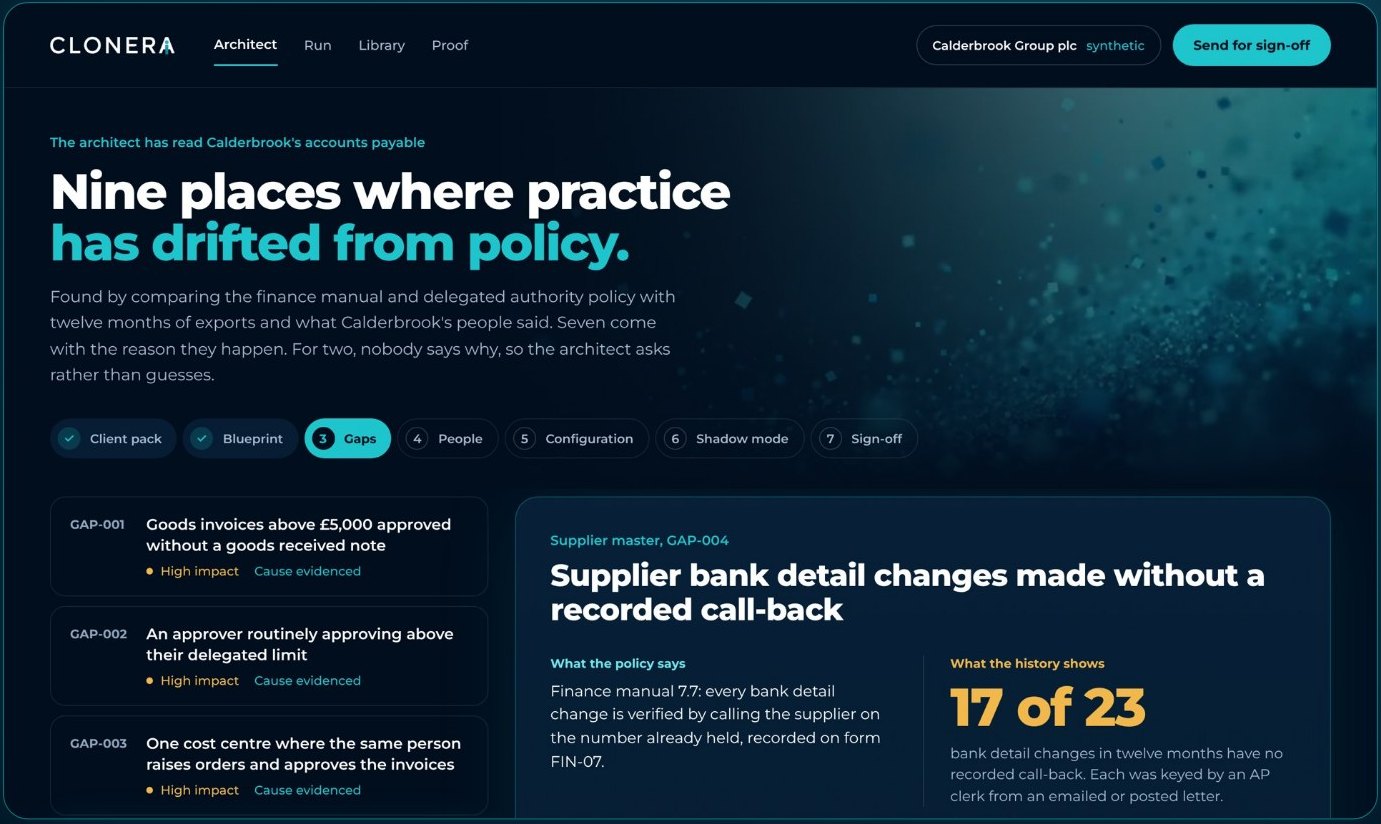
The gap reveal, on our worked example
Where practice has drifted from policy, with the why.
Each gap comes with evidence a finance lead can check, then the human cause, from what people said. Where nobody knows, the architect says so and names who to ask, rather than guessing.
The capability map
Every function. Every role.
The Business Architect maps your business the way a business architect would: functions at level 1, the activities inside them at level 2, and the roles that carry them out. From the boardroom to the shop floor, the work of each role can be cloned, configured to your rules, one function at a time.
Select any function to see the roles it clones, what they read, what they prepare, and what a person still decides.
CHG.01
- Capability mapping
- Value streams
- Operating model design
- Target state roadmaps
- Business architect
- Enterprise architect
- Strategy analyst
Reads
- Strategy papers and board packs
- Process documents and org charts
- Systems and data inventories
Prepares
- Capability and value stream maps
- Current and target operating models
- Prioritised roadmaps
A person decides
- Strategic priorities
- Investment choices
- The target operating model
CHG.02
- Requirements discovery
- Process mapping
- User stories
- Acceptance criteria
- Business analyst
- Senior business analyst
- Process analyst
Reads
- Workshop notes and recordings
- Current processes and procedures
- Systems and their data
Prepares
- Process models from level 0 to level 3
- User stories with acceptance criteria
- Gap and impact analysis
A person decides
- Scope
- Priority of requirements
- Sign-off of requirements
CHG.03
- Planning and scheduling
- Risks, issues and dependencies
- Status reporting
- Benefits tracking
- Project manager
- Programme manager
- PMO analyst
Reads
- Plans and milestones
- Team updates and timesheets
- Budgets and contracts
Prepares
- Plans kept current
- Risk logs and status reports
- Benefits and spend tracking
A person decides
- Stage gates
- Changes to scope and budget
- Escalations to sponsors
CHG.04
- Process discovery
- Lean analysis
- Automation design
- Operating procedures
- Process engineer
- Continuous improvement lead
- Automation analyst
Reads
- System event logs and timings
- Procedures and work instructions
- Error and rework data
Prepares
- Process mining views
- Waste and bottleneck analysis
- Redesigned procedures
A person decides
- Process changes
- Automation priorities
- Changes to controls
CHG.05
- Stakeholder mapping
- Impact assessment
- Communications
- Training design
- Change manager
- Change analyst
- Training designer
Reads
- The change scope and design
- Org charts and role profiles
- Feedback and adoption data
Prepares
- Stakeholder and impact assessments
- Communications plans and drafts
- Training materials and guides
A person decides
- Readiness to go live
- Messages to staff
- Consultation matters
FIN.01
- Invoice matching
- Supplier statements
- Bank detail checks
- Payment run preparation
- Accounts payable clerk
- Senior accounts payable analyst
- Purchase ledger supervisor
Reads
- Invoices in any format, including scanned paper
- Purchase orders and goods received notes
- The supplier master and twelve months of history
Prepares
- Matched, coded invoices
- Approval routing to your matrix
- The weekly payment run
A person decides
- Approvals above each limit
- Any bank detail change, after a call-back
- Release of every payment run
FIN.02
- Cash allocation
- Chasing and disputes
- Credit limits
- Debt recovery
- Cash allocation clerk
- Credit controller
- Credit manager
Reads
- Remittances and bank statements
- The aged debt ledger
- Customer correspondence
Prepares
- Cash allocated to the right invoices
- Chasing letters in your tone
- Dispute summaries with evidence
A person decides
- Credit limit changes
- Write-offs
- Referral to debt recovery
FIN.03
- Month-end close
- Accruals
- Intercompany reconciliation
- Variance commentary
- Assistant accountant
- Financial accountant
- Management accountant
Reads
- Trial balance and ledgers
- Accruals schedules and contracts
- Budgets and prior periods
Prepares
- Month-end journals for review
- Intercompany reconciliations
- Draft variance commentary
A person decides
- Posting of journals
- Judgement calls on provisions
- Sign-off of the close
FIN.04
- Cash forecasting
- Bank reconciliation
- VAT returns
- Reverse charge checks
- Treasury analyst
- Tax analyst
- VAT specialist
Reads
- Bank feeds and cash positions
- Sales and purchase ledgers
- VAT rules and your tax policy
Prepares
- A rolling cash forecast
- Bank reconciliations
- Draft VAT returns with checks
A person decides
- Funding and transfers
- Submission of returns
- Treatment of unusual items
FIN.05
- Starters and leavers
- Variations
- Payroll reconciliation
- Expense claims
- Payroll administrator
- Payroll officer
- Expenses clerk
Reads
- Starter, leaver and change forms
- Timesheets and expense claims
- Your pay and expenses policies
Prepares
- Payroll variations for the run
- Reconciliation to the previous period
- Expense claims checked to policy
A person decides
- Approval of the payroll
- Exceptions to policy
- Any manual payment
COM.01
- Configure, price, quote
- Order entry
- Invoicing
- Revenue checks
- Sales order processor
- Quote to cash analyst
- Billing analyst
Reads
- Enquiries, quotes and orders
- Price lists, discounts and terms
- Customer and credit records
Prepares
- Quotes and orders to your rules
- Invoices raised on time
- Orders reconciled to billing
A person decides
- Discounts outside policy
- Non-standard terms
- Credit for new customers
COM.02
- Cost build-ups
- Margin checks
- Price list updates
- Bid pricing
- Estimator
- Pricing analyst
- Cost engineer
Reads
- Drawings, specifications and bills of materials
- Labour and material costs
- Win and loss history
Prepares
- Costed estimates
- Margin and risk analysis
- Price list changes
A person decides
- The final price
- Margin below target
- Price changes to customers
COM.03
- Lead qualification
- Pipeline hygiene
- Account plans
- Renewals
- Sales development representative
- Account manager
- Sales operations analyst
Reads
- Enquiries and CRM records
- Customer history and contracts
- Product and market information
Prepares
- Qualified leads with context
- Account plans and renewal alerts
- Pipeline and forecast reports
A person decides
- Pursuit of key deals
- Commercial terms
- Forecast commitments
COM.04
- Content production
- Campaigns
- Brand compliance
- Performance reporting
- Marketing executive
- Content writer
- Digital analyst
Reads
- Brand guidelines and tone of voice
- Product and customer information
- Campaign data
Prepares
- Content and campaign drafts
- Brand checks
- Performance reports
A person decides
- What is published
- Spend and channels
- Brand exceptions
COM.05
- Tender review
- Compliance matrices
- Response drafting
- Bid library
- Bid writer
- Bid coordinator
- Proposal manager
Reads
- Tender documents and questions
- Past bids and case studies
- Pricing and capability information
Prepares
- Compliance matrices
- Draft responses
- Submission packs
A person decides
- Bid or no bid
- Final pricing
- Submission
OPS.01
- Requisitions
- Supplier onboarding
- Contract renewals
- Spend analysis
- Buyer
- Procurement officer
- Category analyst
Reads
- Requisitions and budgets
- Supplier records and contracts
- Spend history
Prepares
- Purchase orders to policy
- Supplier onboarding checks
- Renewal alerts and spend analysis
A person decides
- New suppliers
- Contract awards
- Spend above delegated limits
OPS.02
- Demand forecasting
- MRP runs
- Capacity planning
- Schedule changes
- Production planner
- Demand planner
- Materials controller
Reads
- Sales orders and forecasts
- Bills of materials and routings
- Stock and capacity
Prepares
- MRP recommendations
- Production schedules
- Shortage and expedite lists
A person decides
- The master schedule
- Overtime and subcontracting
- Priority changes
OPS.03
- Works orders
- Shop floor data
- Non-conformance
- Inspection records
- Production controller
- Quality inspector
- Quality engineer
Reads
- Works orders and routings
- Shop floor and machine data
- Inspection and test results
Prepares
- Works order progress
- Non-conformance reports
- Corrective action records
A person decides
- Release of product
- Concessions and scrap
- Corrective actions
OPS.04
- Stock control
- Goods-in matching
- Cycle counts
- Despatch
- Stock controller
- Warehouse administrator
- Inventory analyst
Reads
- Stock records and movements
- Purchase orders and deliveries
- Despatch notes
Prepares
- Goods-in matched to orders
- Cycle count variances
- Reorder recommendations
A person decides
- Stock adjustments
- Write-downs
- Orders outside the plan
OPS.05
- Transport planning
- Fleet maintenance
- Facilities requests
- Site safety records
- Transport planner
- Fleet coordinator
- Facilities coordinator
Reads
- Delivery schedules and routes
- Asset and service histories
- Maintenance requests and contracts
Prepares
- Planned routes and bookings
- Maintenance schedules
- Prioritised work orders
A person decides
- Repair or replace
- Contractor spend
- Safety-critical actions
CUS.01
- Contact triage
- Customer correspondence
- Refunds and credits
- Service recovery
- Customer service adviser
- Senior adviser
- Team leader
Reads
- Emails, messages and call notes
- Order and account history
- Your service policies
Prepares
- Triaged contacts with suggested replies
- Refunds and credits for approval
- Service recovery offers
A person decides
- Refunds above limit
- Goodwill gestures
- Vulnerable customer cases
CUS.02
- Complaint logging
- Root cause review
- Response drafting
- Complaints reporting
- Complaints handler
- Root cause analyst
- Complaints manager
Reads
- The complaint and its history
- Call notes and correspondence
- Your complaints policy and timescales
Prepares
- Logged, categorised complaints
- Root cause summaries
- Draft final responses
A person decides
- The outcome and any redress
- Final responses sent
- Regulatory referrals
CUS.03
- First notice
- Evidence review
- Liability decisions
- Settlement preparation
- Claims handler
- Technical claims handler
- Claims engineer
Reads
- First notice and evidence
- Photographs, reports and estimates
- Policy wording and history
Prepares
- Triage and next steps
- Evidence reviews with reasoning
- Settlement recommendations
A person decides
- Liability
- Settlement
- Fraud referrals
CUS.04
- Job scheduling
- Site inspections
- Engineer reports
- Quality checks
- Field service planner
- Scheduler
- Service coordinator
Reads
- Job requests and site details
- Engineer availability and skills
- Reports and photographs from site
Prepares
- Scheduled jobs and routes
- Checked engineer reports
- Quality issues flagged
A person decides
- Priority jobs
- Rework and recalls
- Customer escalations
CUS.05
- Returns authorisation
- Warranty checks
- Credit notes
- Failure analysis
- Returns administrator
- Warranty analyst
- Customer quality engineer
Reads
- Return requests and photographs
- Warranty terms and sales history
- Inspection findings
Prepares
- Returns authorisations
- Warranty decisions for approval
- Failure trend reports
A person decides
- Credits and replacements
- Goodwill outside warranty
- Claims against suppliers
PPL.01
- Job descriptions
- CV screening
- Interview scheduling
- Offers
- Recruiter
- Resourcing coordinator
- Talent partner
Reads
- Vacancies and job descriptions
- Applications and CVs
- Your hiring criteria
Prepares
- Shortlists against criteria
- Interview packs and schedules
- Offer letters for approval
A person decides
- Hiring
- Pay offers
- Rejections after interview
PPL.02
- Onboarding
- Contracts and changes
- Absence management
- Policy queries
- HR administrator
- HR adviser
- HR business partner
Reads
- Employee records
- Absence and leave data
- Your people policies
Prepares
- Contracts and onboarding packs
- Absence triggers and reports
- Answers to policy questions
A person decides
- Disciplinary and grievance matters
- Exceptions to policy
- Dismissals
PPL.03
- Training needs
- Course design
- Compliance training
- Competency records
- Learning coordinator
- Learning designer
- Competency assessor
Reads
- Role profiles and skills
- Training records
- Procedures and policies
Prepares
- Training plans
- Courses and assessments
- Competency and expiry reports
A person decides
- Certification of competence
- Training budget
- Mandatory requirements
PPL.04
- Risk assessments
- Incident reporting
- Inspections
- Compliance records
- Health and safety adviser
- Safety coordinator
- Compliance officer
Reads
- Risk assessments and method statements
- Incident and near-miss reports
- Legislation and your policies
Prepares
- Updated risk assessments
- Incident investigations
- Inspection schedules
A person decides
- Stopping unsafe work
- Reportable incidents
- Safety-critical controls
PPL.05
- Headcount planning
- Rotas and shifts
- Skills mix
- Workforce reporting
- Workforce planner
- Resource manager
- People analyst
Reads
- Demand and activity data
- Headcount and skills
- Rotas and leave
Prepares
- Rotas matched to demand
- Headcount and skills gaps
- Workforce reports
A person decides
- Headcount
- Shift patterns
- Restructures
TEC.01
- Solution design
- Integration patterns
- Non-functional requirements
- Architecture decisions
- Solution architect
- Integration architect
- Technical analyst
Reads
- Requirements and user stories
- Current systems and interfaces
- Your technology standards
Prepares
- Solution designs and diagrams
- Architecture decision records
- Integration specifications
A person decides
- Architecture choices
- Exceptions to standards
- Build or buy
TEC.02
- Code and configuration
- Code review
- Documentation
- Release preparation
- Software engineer
- Senior engineer
- DevOps engineer
Reads
- User stories and designs
- The codebase and its history
- Defects and logs
Prepares
- Code and configuration changes
- Reviewed pull requests
- Release notes and documentation
A person decides
- Merges to the main line
- Releases to live
- Security-sensitive changes
TEC.03
- Test planning
- Test case design
- Regression testing
- Defect triage
- Test analyst
- QA engineer
- Test manager
Reads
- Requirements and acceptance criteria
- Builds and release notes
- Defect history
Prepares
- Test plans and cases
- Automated and regression test runs
- Triaged defects with evidence
A person decides
- Exit criteria
- Defect severity
- User acceptance sign-off
TEC.04
- ERP configuration
- Master data
- Workflows and reports
- Upgrades and patches
- ERP analyst
- Systems administrator
- Master data analyst
Reads
- ERP configuration and setup
- Master data and audit trails
- User requests and incidents
Prepares
- Configuration changes for approval
- Cleansed master data
- Reports and workflow fixes
A person decides
- Changes to live configuration
- Master data ownership
- Upgrade timing
TEC.05
- Service desk triage
- Access requests
- Asset records
- Security monitoring
- Service desk analyst
- IT support engineer
- Security analyst
Reads
- Tickets and emails
- Asset and user records
- Security alerts and access policies
Prepares
- Triaged, routed tickets
- Access requests checked against role
- Alerts investigated with evidence
A person decides
- Privileged access
- Changes to live systems
- Security incidents
GOV.01
- Policy monitoring
- Regulatory reporting
- Conduct reporting
- Incident logging
- Compliance analyst
- Risk analyst
- Compliance manager
Reads
- Policies and regulatory rules
- Incident and breach logs
- Management information
Prepares
- Monitoring results with evidence
- Draft regulatory returns
- Incident records
A person decides
- Breach reporting
- Risk acceptance
- Submissions to regulators
GOV.02
- Contract review
- NDAs
- Obligation tracking
- Disputes support
- Contracts analyst
- Paralegal
- Contracts manager
Reads
- Contracts and NDAs
- Your playbook and standard positions
- Correspondence on disputes
Prepares
- Contract reviews against your playbook
- Obligation and renewal trackers
- Dispute bundles
A person decides
- Signature
- Deviations from standard terms
- Litigation
GOV.03
- Control testing
- Audit evidence
- Issue tracking
- Policy attestations
- Controls tester
- Audit analyst
- Audit senior
Reads
- Controls and procedures
- Transaction samples
- Previous findings
Prepares
- Control tests with evidence
- Audit evidence packs
- Issues tracked to closure
A person decides
- Audit opinions
- Severity of findings
- Closure of issues
GOV.04
- Management information
- Data quality
- Board packs
- KPI tracking
- Reporting analyst
- Data analyst
- Data scientist
Reads
- Systems data and spreadsheets
- KPI definitions
- Board and committee timetables
Prepares
- Management information packs
- Data quality checks
- Draft board packs
A person decides
- What goes to the board
- Definitions of measures
- Commentary and conclusions
GOV.05
- Data protection requests
- Records retention
- Privacy assessments
- Breach handling
- Data protection analyst
- Information governance analyst
- Records manager
Reads
- Subject access requests
- Data maps and retention schedules
- Privacy notices and contracts
Prepares
- Request responses for review
- Privacy impact assessments
- Breach logs and timelines
A person decides
- Disclosures
- Reports to the regulator
- Risk acceptance
An illustrative map. Yours is drawn from your own documents, data and people, and signed off by your team. Roles that carry personal or statutory accountability, such as a data protection officer, a solicitor or an auditor, stay with named people: the clone prepares their work, and they decide.
Our worked example
Accounts payable, outside in.
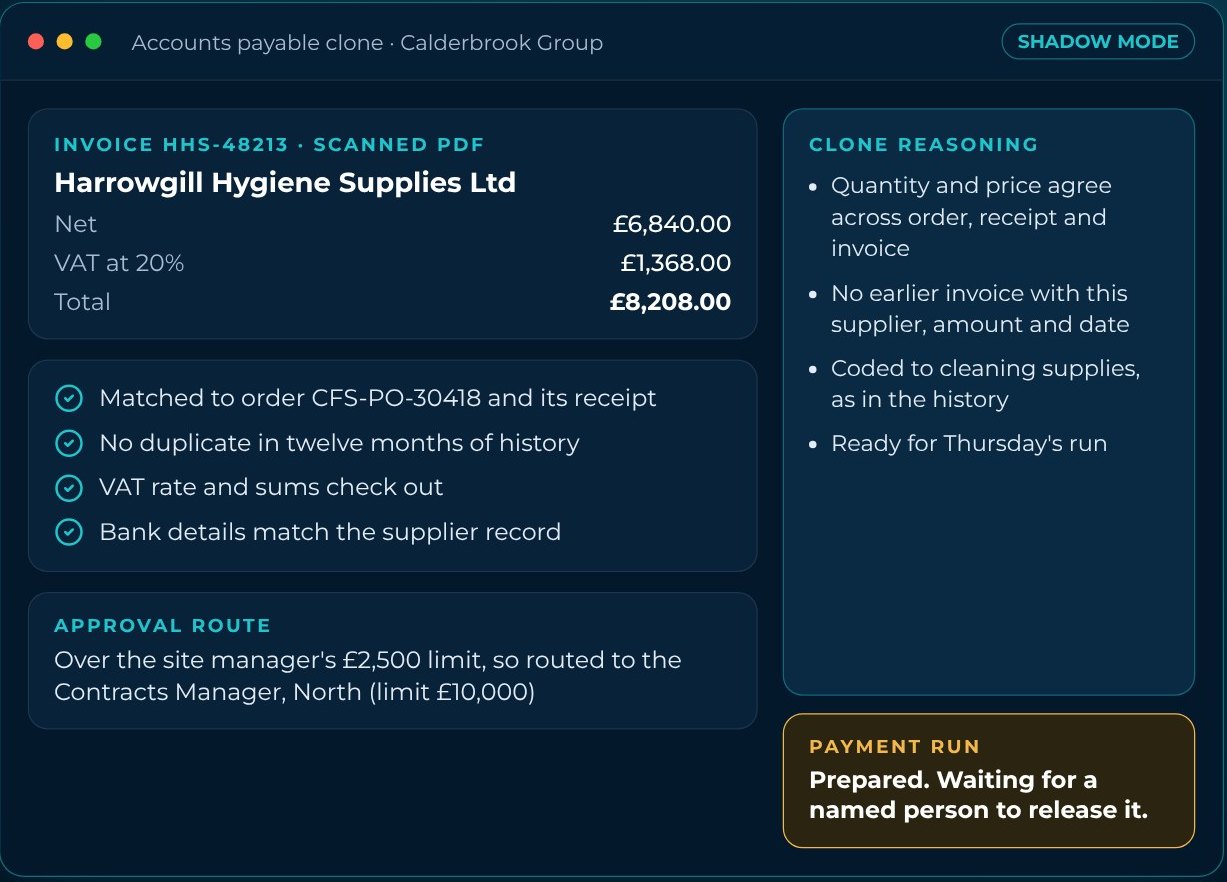
We show accounts payable because nearly every business has it, it runs on clear rules, and the results are simple to check: paid right, paid once, paid on time. It is also one of the most common targets for fraud, so it puts every control to the test. Your own first function is chosen from your capability map, wherever the value is greatest.
- Reads invoices in any format, including scanned paper
- Matches each one to the order and the receipt
- Routes approvals to your matrix and limits
- Prepares the payment run for a person to release
Who it servesSuppliers, budget holders, the finance director and your auditors.

Controls
The AI reasons. The controls decide.
Six controls sit in fixed code, tested against deliberate attempts to break them. The AI model never makes these decisions. Nothing acts on a customer, a ledger or a payment until you switch that step on in writing, and some actions, such as releasing a payment run, never go above step 3.
Bank details
Verified by a call-back to the number on file, approved by a different person.
Separation of duties
No one raises and approves the same payment.
Approval limits
Your matrix is enforced in code, never by the AI model.
Duplicates and VAT
Checked on every invoice before it can be paid.
Hidden instructions
Documents are treated as data. Hidden instructions are screened for and sent to a person, and no document can change a limit, an approval or a payment, because those sit in fixed code.
Payment release
Only a named person releases a payment run.
Capability and permission
Capable of the whole role. Permitted one step at a time.
Every clone is configured to a role, so it can take on everything that role does. What it is allowed to do is a separate decision, made by you in writing, one function and one step at a time. Moving up a step is a sign-off, not a rebuild.
- 1Read.
Sees the work as it arrives. Changes nothing.
- 2Prepare.
Drafts the work: lists, letters, matches and reports, ready for your team.
- 3Recommend.
Proposes each action with its reasoning. A person agrees, changes or rejects it.
- 4Act with approval.
Carries out an action only once a named person has approved it.
- 5Act within limits.
Handles routine cases inside the limits you set, with every action logged.
Most pilots run at steps 1 to 3. Each step up is agreed in writing for one function, and you can step back down at any time. The same ladder applies to every role, from a claims handler or a credit controller to a site inspector or a buyer.
Deploy in practice
Real work, in real businesses.
Clones built by Clonera are already working in real businesses. Every client is unnamed here, and every figure comes from the live system’s own records, not a rehearsal.
Field inspection
1,241site photos read and labelled across 63 inspection reports since JuneRough notes and photos go in; the clone labels each photo, raises defects with a deadline and drafts the summary and recommendations. 21 critical defects found so far. The inspector takes the photos and checks every rating.
Private clinic
379inbox emails triaged since AugustThe clone sorts every email, flags anything urgent and writes reply drafts, 170 so far. Half go straight to a person, and nothing is sent without one. Alongside, it keeps a daily money worklist: 655 follow-ups raised.
Training provider
944customer enquiries handled in 21 weeksEvery enquiry acknowledged in a median of 16 seconds, then followed through to booking, payment and joining instructions, with the team making the calls that matter. Around a quarter have booked so far.
Vehicle damage
3,749vehicle damage assessments in five monthsThe clone reads the photos the way a specialist assessor would, recommends the right next step for each vehicle and shows its reasoning on every case, in a median of 15 seconds, for the client’s team to act on.
Figures from each system’s own records to October 2026, excluding test and demonstration data.
The fraud catch, on our worked example
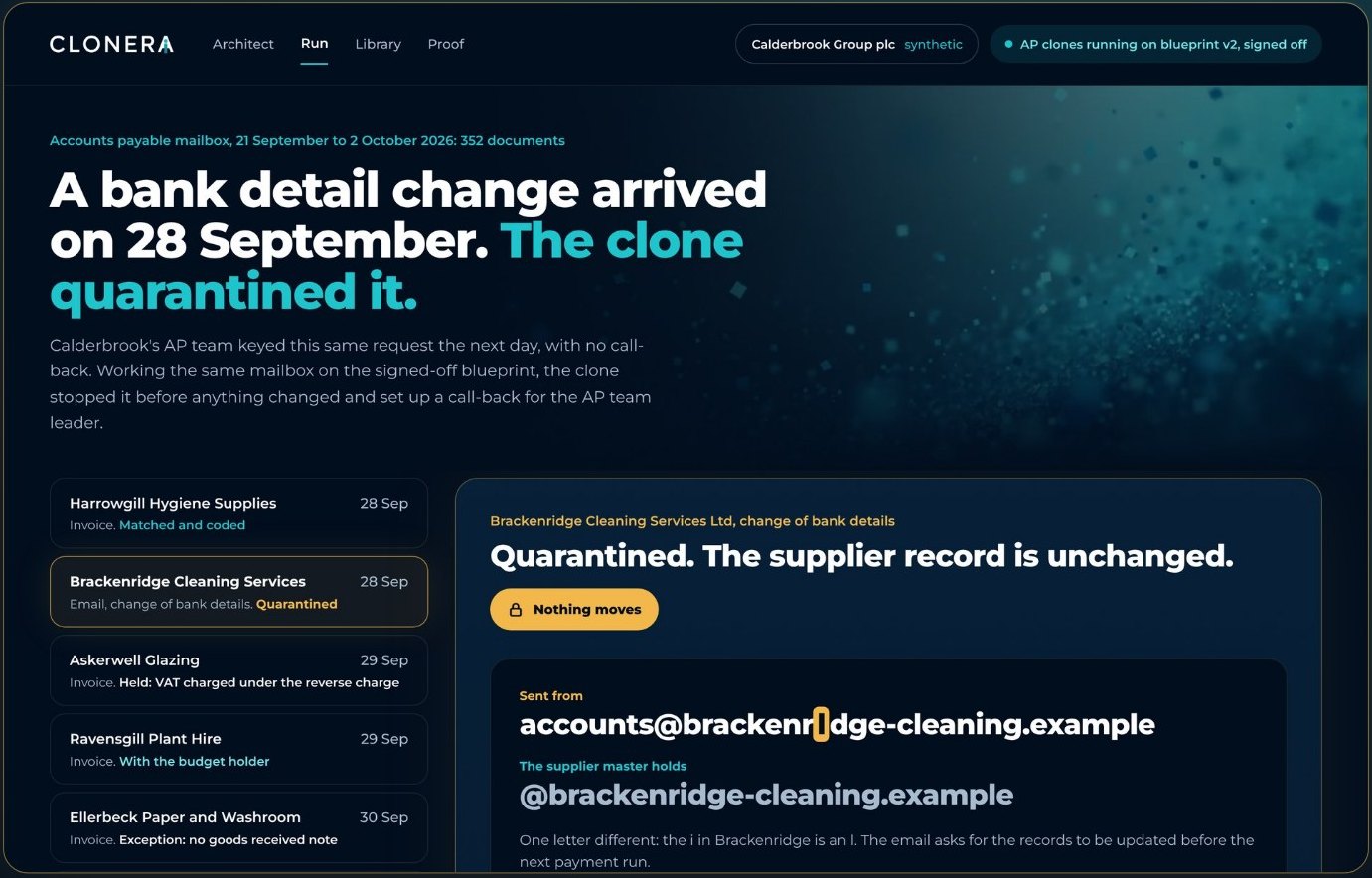
One letter different. Nothing moves.
A request to change a supplier’s bank details arrived from a domain one letter away from the real one. In the worked example’s history, its own team keyed the change the next day.
Working the same mailbox on the signed-off blueprint, the clone quarantined it before anything changed, and set up a call-back to the number already on file.
How we rehearse
Rehearsed in full before it sees your data.
Our worked example is a fictional UK services group with three divisions, a head office and one shared accounts payable team. We built it so every clone is rehearsed against known answers before it sees a client’s data.
It is a rehearsal, not proof. The real test is shadow mode on your own work, where your team agrees, changes or rejects every recommendation before anything goes live.
The architect is given the finance manual, delegated authority, a process map and 60 suppliers; 12 interviews, a day observing the team and a staff survey; twelve months of exports, with 3,278 invoices and 119 payment runs; and a fortnight’s mailbox of 352 documents, with fraud traps among them.
Traps are planted at higher rates than a real ledger, so every control is tested. Fictional throughout: no client data is used.
The golden thread
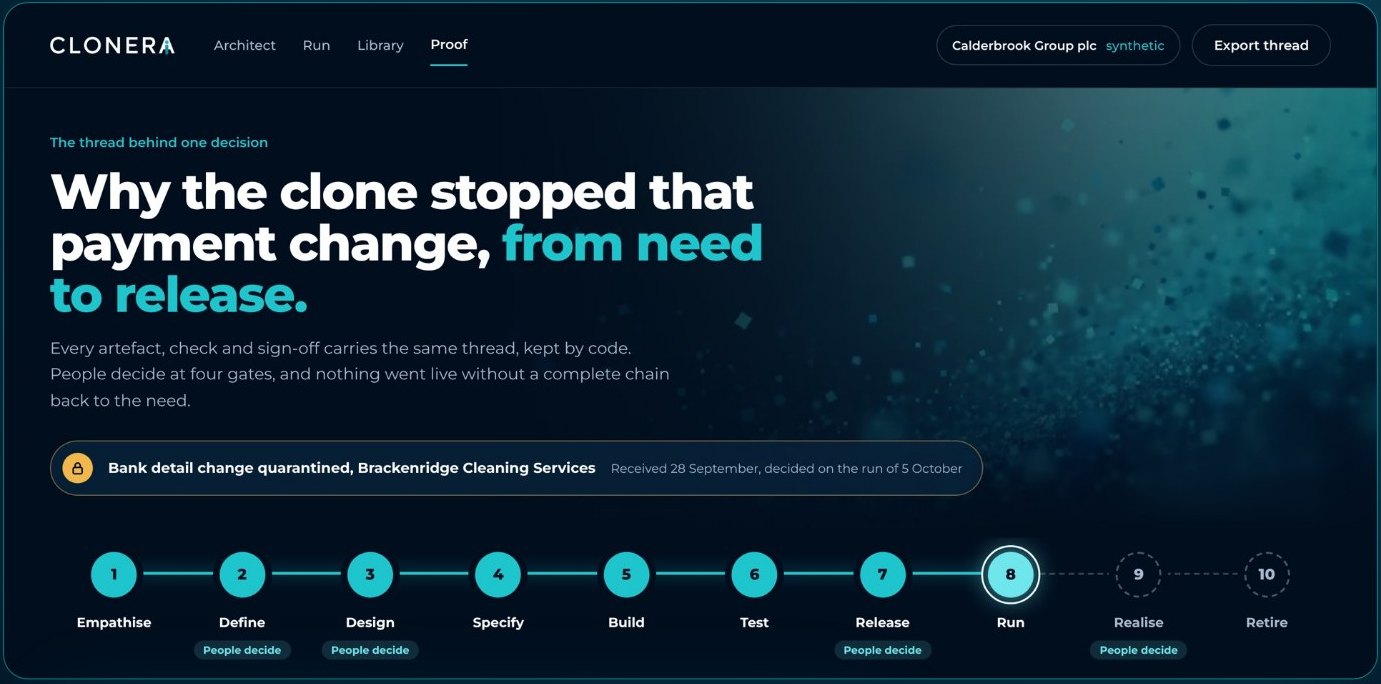
Every decision, traced from need to release.
Ten stages, from design thinking through build and release to the benefit delivered. A separate check at every gate, and people decide at four of them.
The thread is kept by code, so any change to the trail shows. Auditors see exactly why a clone did what it did, and who approved it.
What leaders ask, and how Deploy answers.
Is it only as good as the data?
It reads scans and paper. What it cannot read, it says so, and a person decides.
Is there a big integration job?
It starts on exports, in shadow mode. We agree in week 0 who produces them and how, and any effort on your side is in the proposal. Integration follows once the value is proven.
What if the person got it wrong?
It shows the evidence, and a person decides whether the fix becomes a rule.
Will people get rusty, and the AI drift?
People decide a blind sample every week. A disagreement sends the clone back to shadow mode.
What happens when new AI models arrive?
A new model is only used once it passes the same tests with the same control outcomes.
Are our data and IP protected?
UK and EU hosting and model endpoints only, written into the data processing agreement we sign with you.
A baseline, not a blocker
Yours to keep. Simple to price.
Everything Deploy produces stays with you, and it is priced so cost only grows with what you switch on.
The pilot
A fixed fee, agreed before it starts.
Then
A monthly fee per entity and function, so cost grows only with what you switch on.
The figures
Set out in a proposal after a demonstration, with a payback model built on your own numbers. Any connection to your systems is quoted as a fixed, one-off fee before you agree to it.
Your outputs are yours
The blueprint, the gap register and the decision trail.
Your people stay in control
They sign off every rule and release every payment run.
Works with what you have
Alongside your systems and the AI tools you already use. Nothing ripped out.
One function at a time
Each switched on when it has proved itself, so nothing rests on one big bang.
If we stop, you carry on
Whatever step a clone has reached, your systems and records stay yours, and your team takes the work straight back.
Pilot to launch
Read-only in week 1. Live from week 7.
Week 0 starts once the contract, data processing agreement and your security review are in place, and nothing goes live unless you say go at week 6. The same plan works for any function on your capability map. You choose where to start; most begin where volume, rules and risk meet.
- 0Week 0: your inputs
Process maps, policies, approval limits, twelve months of system exports and mailbox access for your first function.
- 1Week 1: understand
A standard clone for your first function reads a sample of your real cases, read-only, so the blueprint is built on how the work really runs. It changes nothing.
- 2Week 2: configured to you
Blueprint and gap register signed off, and the clone tuned to your rules and limits.
- 3Weeks 3 to 6: shadow
Across a full business cycle, with a weekly scorecard both ways.
- 6Week 6: go or no-go
Decided on criteria agreed in week 1.
- 7Week 7 on: live and scale
Live at the steps you have signed off, on the first entity, then the next entity and function, each one faster.
Indicative. Shadow mode covers at least one full business cycle, such as a month-end, and people sign off every decision that matters.
One method, across the business.
Group back office
Start where volume is highest, across every entity, then extend function by function across finance, operations and people.
Acquisition integration
Read each acquired business from its own documents, map it to the group model, and flag the gaps first.
Customer journeys
Conversational agents by voice and WhatsApp, working to the same blueprint and the same controls.
See Deploy read a business, end to end.
A live demonstration on our worked example: the Business Architect reading the business, then a clone working in shadow mode with the controls put to the test.